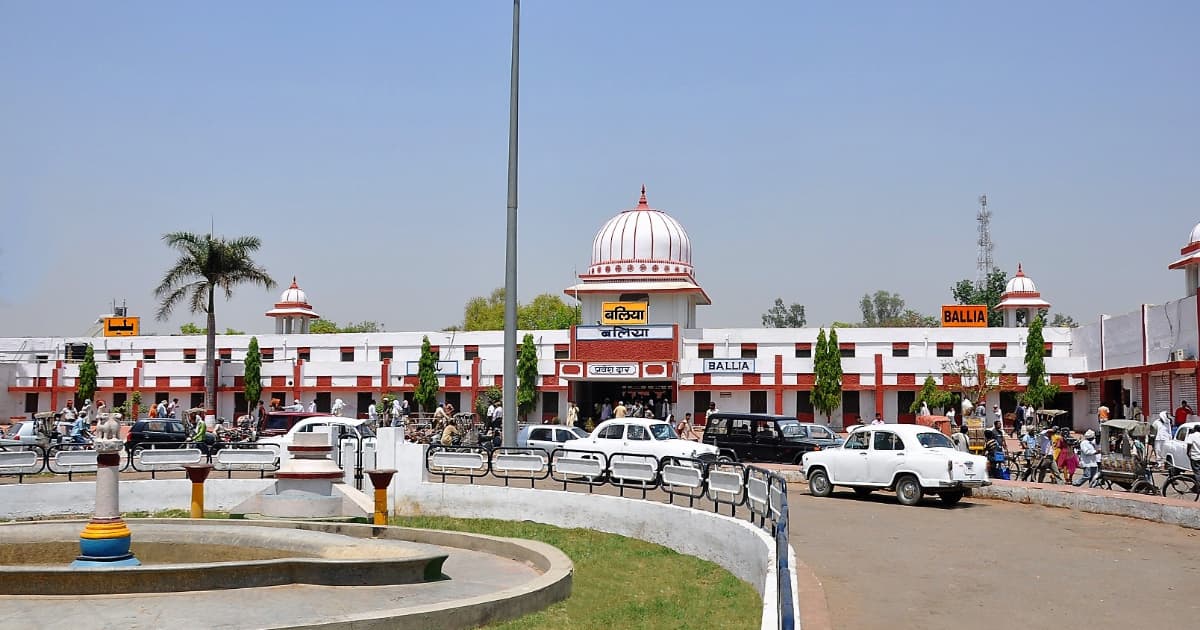
Baghi Ballia – The Land of Rebels, Saints & Stories
Ballia, a district between the Ganga and Saryu rivers, is known for its role in 1857, its saints, and its scholars. This guide covers its history, top attractions, and how to reach it.
Baghi Ballia is not just a place – it is a spirit
Nestled between the sacred rivers Ganga and Saryu (Ghaghra), Ballia is a historic district of eastern Uttar Pradesh known for rebellion, scholarship, sacrifice, and self-respect.
Why "Baghi" Ballia?
Ballia earned the name "Baghi" (Rebel) because its people never accepted injustice silently.
During India's freedom struggle, Ballia rose again and again, often before the rest of the country.
Mangal Pandey, one of the first freedom fighters of India, was born in Ballia and fired the first shot of the 1857 uprising.
Chittu Pandey, the hero of the Quit India Movement, led Ballia's historic revolt in 1942, freeing the district from British control, even if briefly.
That fearless temperament is why Ballia became Baghi Ballia.
Ancient & Sacred Roots
Ballia is believed to be one of the oldest continuously inhabited regions in North India.
According to tradition, sages such as:
- Rishi Bhrigu
- Rishi Valmiki
- Rishi Parshuram
- Rishi Durvasa
performed penance here. The famous Bhrigu Temple & Ashram still stand as living symbols of this spiritual heritage.
Name & Identity
There are two popular beliefs about how Ballia got its name:
- From Rishi Valmiki (Balmiki), the author of the Ramayana.
- From the word "Balu" (sand), as the region lies between rivers and has sandy soil.
Over time, Balian became Ballia.
History That Shaped a Rebel District
Ballia became a formal district on 1 November 1879, but its history stretches far deeper, from the Kosala Kingdom to the British era.
The region witnessed:
- Administrative changes under Awadh rulers and the British
- Repeated resistance movements
- Major participation in the Quit India Movement (1942), where 22 people were martyred in a single uprising
Land of Thinkers, Leaders & Literature
Ballia has contributed immensely to India's intellectual and political life.
Renowned Hindi scholars and writers like Hazari Prasad Dwivedi and Amarkant.
Former Prime Minister Chandra Shekhar was born here.
Ballia leaders were part of the historic moment when Atal Bihari Vajpayee addressed the United Nations in Hindi.
Places of Interest
Ballia offers a rich blend of nature, spirituality, history, and living traditions.
Surha Taal Bird Sanctuary
A natural freshwater lake and bird sanctuary, home to migratory birds
Shaheed Smarak
Memorial dedicated to martyrs of India's freedom struggle
Bhrigu Mandir
Ancient temple associated with Rishi Bhrigu
Dardari Mela
Held in Nov–Dec; considered one of the world's largest cattle fairs
Basant Vihar Jeera Basti
Botanical garden–like green space
Sri Chain Ram Baba Temple
Sri Khapdia Baba Temple
Sri Vigyan Dev Ji Maharaj Temple
Sri Kameshwar Dham
Sri Jangli Baba Mandir
Mangla Bhawani Mandir
Jai Prakash Nagar Smarak
Economy & Daily Life
Ballia's fertile land makes agriculture the backbone of its economy.
The region is also famous for bindi manufacturing (Manair) and small-scale industries, along with sugar and cotton weaving units.
How to Reach Ballia
Ballia is well connected by air, rail, and road, making travel convenient from major cities.
By Air
- Nearest airport: Lal Bahadur Shastri International Airport (Babatpur)
- Distance from Ballia: approx. 141 km
By Rail
- Ballia Railway Station is a major station on Indian Railways
- Around 35 trains daily, including two Rajdhani Express trains
- Other major stations: Belthara Road, Rasra
By Road
- Well connected to Varanasi, Gorakhpur, Patna, and other major cities of Uttar Pradesh and Bihar
Distance Chart
Where We Come From
We Say "Designed In Baghi Ballia, Built For Bharat" because this land teaches:
- To question, not blindly accept
- To build with honesty
- To stand up when it matters
MetroYatra carries the same values (clarity, courage, and service) from Ballia to Bharat.
Sources & References
This travel guide is based on local experience, historical references, and official publications. A selection of key sources is listed below.
Official publications and website of the Uttar Pradesh Tourism Department.
Historical records and census data from Government of India and Government of Uttar Pradesh.