MetroYatra covers metro routes, fares, station details, maps, and train timings across India. Find routes with interchange details, check token and smart card fares, and look up gate, platform, and facility information for any station.
Metro networks covered include Delhi, Gurugram, Noida, Bengaluru, Mumbai, Hyderabad, Chennai, Kochi, Jaipur, Lucknow, Nagpur, Ahmedabad, Pune, and more.
What You Can Do on MetroYatra
Plan routes between any two metro stations with interchange details
Check fares (both token and smart card) before you travel
See train timings, frequency, and travel time estimates
Explore metro networks by city, line, or station
Find entry and exit gates for every station
Check lifts, escalators, parking, and platform details
Discover nearby places, landmarks, and attractions around stations
Read the latest metro news and network updates
MetroYatra Features: Routes, Fares, Maps & More
MetroYatra brings together routes, fares, station details, maps, and real-time updates.
Metro Routes with Interchange Details
Plan your journey from any station to any other, with interchange details.
Find the fastest or most direct route between two stations.
See exactly where to change lines, with platform and direction details.
Check estimated travel time and number of stops.
Fares & Ticket Information
Check token and smart card fares before you travel.
View fares for any route across all major metro networks.
Compare token and smart card prices to save money.
Understand the fare structure for your city's metro.
Station Details
Find everything about a station: gates, platforms, facilities, and nearby places.
Find entry and exit gate details for every metro station.
Check lift and escalator availability for easier navigation.
See platform numbers, directions, and train frequency.
Metro Lines & Network Overviews
Browse any metro network line by line, station by station.
Explore all lines within a metro network and their terminal stations.
See the full station list for any line in order.
Check route length, total stations, and line status.
Metro Maps
Visual maps for every metro network, showing lines, stations, and interchanges.
View metro network maps for all covered cities.
Understand how lines connect and where interchanges happen.
Use the map to identify interchange stations and plan your route.
Nearby Places Around Stations
Find restaurants, landmarks, hospitals, and more near any metro station.
Find popular places, tourist attractions, and key services near stations.
Combine your metro route with nearby destinations.
Parking & Accessibility
Check parking, lifts, and accessibility support at metro stations.
See which stations have parking and how much capacity they have.
Find lift and wheelchair-accessible routes within stations.
Latest Metro News & Updates
Route expansions, new stations, and service changes.
Read the latest metro news from across India.
Track new line openings, fare changes, and network expansions.
Plan Your Metro Journey in 3 Simple Steps
Finding your metro route on MetroYatra takes three steps.
1Choose your city or metro network
2Select your starting and destination stations
3Get your route with interchanges, fares, and travel time
Interesting Metro Facts About India
India's metro story began in Kolkata in 1984 and has grown into one of the world's most extensive urban rail networks.
Kolkata Metro was India's first metro, starting operations in 1984.
Delhi Metro is the largest metro network in India, stretching across Delhi and NCR cities including Noida, Gurugram, and Faridabad.
Indian metro stations are built underground, elevated, and at ground level, depending on each city's geography.
Several Indian metro lines use CBTC signalling, with some operating driverless or semi-driverless trains.
Metro rail reduces road traffic, fuel use, and air pollution in dense urban areas.
Metro Travel Do's & Don'ts
A few simple habits make metro travel safer and more comfortable for everyone.
Do
✓Stand behind the yellow safety line on the platform.
✓Let passengers exit the train before you board.
✓Follow instructions from metro staff and security.
✓Keep your belongings close and stay aware of your surroundings.
Don't
✗Don't block or force open closing train doors.
✗Avoid pushing during peak hours, since trains run frequently.
✗Don't make noise or cause disturbance inside the train.
✗Don't travel without a valid ticket or smart card.
Metro Rail News & Updates
Track new lines, route extensions, fare updates, and service changes from metro networks across India.
Agra Metro Corridor 2: UPMRC Awards Rs 123.96 Crore Mall Road Depot Contract to GHV India
UPMRC has awarded a Rs 123.96 crore contract to GHV (India) Private Limited to build the depot and workshop at Mall Road for Agra Metro Corridor 2.
The package covers civil work, the pre-engineered building, and the electrical and mechanical systems.
Corridor 2 will run between Agra Cantt and Kalindi Vihar. A depot is where trains are stabled, cleaned and maintained, so the contract is a step towards the corridor being able to run services rather than a change to the line itself.
Bengaluru Metro Pink Line's First 7.5 km Stretch From Kalena Agrahara to Tavarekere Is Ready to Open
The first stretch of Namma Metro's Pink Line, running 7.5 km from Kalena Agrahara to Tavarekere, is ready to open to passengers.
BMRCL is waiting on the central government to set an inauguration date. Development Minister Krishna Byre Gowda said the state is hopeful of getting one in September 2026.
He took a trial ride on the stretch along with Bengaluru South MP Tejasvi Surya, MLA M. Krishnappa and BMRCL Managing Director P.C. Jaffer.
Chennai Metro Carried 1.04 Crore Passengers in August 2026, With 4.01 Lakh on Its Busiest Day
Chennai Metro carried 1,04,04,098 passengers between 1 and 31 August 2026. The busiest day was 14 August, when 4,01,607 people travelled.
The NCMC Singara Chennai Card accounted for 52,84,196 journeys, just over half the month's total. Among the digital options, ONDC came to 12,47,168 journeys, the Chennai One app 3,10,474, Paytm 3,09,569, PhonePe 2,73,438 and WhatsApp ticketing 4,69,198. Paper QR tickets accounted for 20,20,687.
CMRL gives a 20 per cent discount on journeys paid for with the NCMC card or a digital QR ticket, but not on paper QR tickets bought at the counter.
Kochi Metro Phase 3 DPR Submitted: 17.5 km Aluva to Angamaly Line With 15 Stations via Cochin Airport
Kochi Metro Rail Limited has submitted the detailed project report for Phase 3, a 17.5 km line from Aluva to Angamaly that serves Cochin International Airport on the way.
The route follows NH44 from Aluva to Kariyad on an elevated viaduct, then runs 3 km underground to reach the airport at Nedumbassery. Fifteen stations are proposed, with separate stops for the airport and the airport railway station.
The report is now with the Kerala government, and goes to the Union Ministry of Urban Affairs after that. A link to Angamaly railway station was left out of the plan.
Patna Metro Corridor 2: Underground Tunnelling Reaches 7.4 km of 7.8 km, Six Stations on the Stretch
Patna Metro has dug 7.4 km of the 7.8 km underground section on Corridor 2, leaving about 400 metres to go.
The stretch runs from the Malahi Pakri ramp through Akashvani towards Rajendra Nagar, and carries six underground stations: Rajendra Nagar, Moin-ul-Haq Stadium, University, PMCH, Gandhi Maidan and Akashvani. Civil work is targeted for completion by October 2026, after which the systems stage starts, covering track laying, overhead electrical work, cabling and signalling.
The 6.2 km priority stretch from Patliputra Bus Terminus to Malahi Pakri, with five stations, already runs.
Delhi-Meerut Namo Bharat Sets Daily Ridership Record of Over 1.6 Lakh on Raksha Bandhan 2026
The Delhi-Ghaziabad-Meerut Namo Bharat corridor carried more than 1.6 lakh passengers on 28 August 2026, its highest in a single day. The previous record was 1,49,922 on 3 August 2026.
NCRTC ran 47 extra trips on 27 and 28 August for Raksha Bandhan, which brought trains to roughly every eight minutes on both days.
The corridor normally carries over one lakh passengers a day. The full 82 km route opened on 22 February 2026, and Begumpul, Ghaziabad and Anand Vihar are its busiest stations.
Pune Metro Line 3 Hinjewadi to Shivajinagar Set to Open in September 2026 With 12 Stations Cleared
Pune Metro Line 3, running 23.3 km from Hinjewadi to Shivajinagar via Balewadi, is set to open to passengers in early September 2026.
Services will start on the Maan to Balewadi section of about 8 km, where 12 stations have been cleared for passenger use. The Commissioner of Metro Rail Safety approved this section on 23 July 2026. Five more stations are awaiting inspection, and clearing them would take the opening stretch to 17 stations.
Trains are on trial runs and can reach 80 kmph. The line is being built by PMRDA, with Tata and Siemens involved.
Bhopal Metro Train Timings Change From 17 August 2026: Trains Every 15 Minutes, 62 Trips on Weekdays
Bhopal Metro moved to a new timetable on 17 August 2026, with trains running every 15 minutes through the day.
From Monday to Saturday the service runs between 11.30 am and 7.30 pm, making 62 trips in both directions. The first train leaves Subhash Nagar at 11.30 am and AIIMS at 12 noon. The last leaves Subhash Nagar at 7 pm and AIIMS at 7.30 pm.
On Sundays and public holidays the metro runs an hour longer, until 8.30 pm, with 70 trips. Madhya Pradesh Metro Rail Corporation said the even 15-minute spacing is meant to cut waiting time at stations.
Gurugram Metro Phase 2 Gets Rs 1,409 Crore World Bank Loan for the 13 km Sector 9 to Cyber Hub Line
The World Bank has approved a Rs 1,409 crore loan for Gurugram Metro Phase 2, which will run about 13 km from Sector 9 to Cyber Hub with 14 stations. The phase is costed at around Rs 2,700 crore in total.
Tenders are being evaluated by Gurugram Metro Rail Limited and the Haryana Mass Rapid Transport Corporation. Major civil work is expected to start once they are approved.
Phase 2 is one half of the wider 28.5 km Gurugram Metro plan from Millennium City Centre to Cyber City. Phase 1 covers 15.22 km, also with 14 stations.
Lucknow Metro Starts Anjaneya Electric Feeder Service From Amausi and Indira Nagar Metro Stations
Lucknow Metro started an electric feeder service called Anjaneya on 12 August 2026, running from Amausi metro station.
The service covers four routes, BR-03, BR-04, BR-08 and R-18, from two metro stations, Amausi and Indira Nagar. Vehicles run daily from 6 am to 10.30 pm, and fares range from Rs 15 to Rs 50.
Each vehicle carries an SOS emergency button, CCTV cameras and GPS tracking. The point is to cover the short distance between a metro station and nearby neighbourhoods, so passengers are less dependent on auto-rickshaws at the end of a journey.
Ahmedabad Metro Phase 3 Clears PIB: 60 km Expansion With 41 Elevated Stations and a Dholera Airport Link
The Public Investment Board has cleared Ahmedabad Metro Phase 3, a 60 km expansion with 41 elevated stations.
The main corridor runs from Thaltej Gam to Badrabad, following the Sardar Patel Ring Road through Bopal and Shantipura. A second corridor forms a loop through Vadaj, with interchanges at Gujarat University, APMC, Amraiwadi and Vadaj.
Badrabad, near the Ahmedabad-Dholera Expressway, is planned as the point where the network can later reach Dholera International Airport. The Union Cabinet must approve the plan before building starts.
Indore Metro to Start Underground Tunnelling With a 1,000-Tonne Tunnel Boring Machine From the Airport
Indore Metro is about to start work on its first underground section using a tunnel boring machine of around 1,000 tonnes, brought in from Thailand.
Digging starts near the airport and runs towards Kalani Nagar. The machine has a 6.5 metre cutting head and can dig close to 20 metres of tunnel a day, putting the reinforced concrete lining in place as it goes. Two parallel tunnels will be built, one for trains heading into the city and one for the return.
The underground network comes to about 12 km in total, and the full section is expected to take four to five years.
Hyderabad Metro to Upgrade 10 Busiest Stations in a Pilot Covering Parking, Crowding and Cleanliness
Hyderabad Metro Rail Limited will upgrade 10 of its busiest stations, targeting peak-hour crowding, parking and day-to-day upkeep. The work is a pilot, meant to be extended across the rest of the network once it is proven.
Street-level parking will be reorganised at Begumpet, Ameerpet and Raidurg to use the space better. At the IT hubs, the Raidurg skywalk and the crowded Mindspace junction are being rearranged so people can move through during office hours. Safety checks are also planned for the retail units under stations.
Additional Managing Director B Ajith Reddy inspected the stretch from Begumpet to Raidurg before the plan was announced.
Jaipur Metro Phase 2 Construction Begins on the 41 km Prahladpura to Todi Mod Corridor Costing Rs 13,037 Crore
Work on Jaipur Metro Phase 2 started on 22 July 2026, when Chief Minister Bhajanlal Sharma began piling at the metro depot in Sitapura.
The corridor runs nearly 41 km from Prahladpura to Todi Mod and is costed at over Rs 13,037 crore. It will link Sitapura industrial area, Jaipur airport, Tonk Road, SMS Hospital and Stadium, the railway station, Ambabari, Vidhyadhar Nagar and the Vishwakarma industrial area.
The Prime Minister laid the foundation stone remotely on 4 July 2026. Work worth over Rs 918 crore has been approved in the first package.
Nagpur Metro Phase 3: RITES Wins DPR Contract for Four New Corridors Covering 55 km
RITES has won the Rs 3.12 crore contract to prepare the detailed project report for Nagpur Metro Phase 3, covering four new corridors that total 55 km. The report is due in 270 days.
The corridors are Mankapur Chowk to Rachana Junction along the Inner Ring Road at 25 km, Sitabuldi to Koradi at 11.5 km, Khapri to New Nagpur at 15 km, and a 3 km Butibori extension. Together they would take the network to 139 km.
RITES will also study whether Phase 3 can run driverless trains and whether an underground stretch is workable.
Kolkata Metro Purple Line: TBM Durga Completes Kidderpore-Victoria Tunnel Breakthrough, July 2026
Kolkata Metro's Purple Line reached a tunnelling milestone on 10 July 2026, when tunnel boring machine 'Durga' broke through at the proposed Victoria metro station. The drive from Kidderpore to Victoria took exactly one year, having started on 10 July 2025.
The Purple Line will eventually run 18.84 km from Joka to Esplanade; about 7.74 km between Joka and Majerhat is already operational. Durga and its twin machine 'Divya' will now tunnel beneath the Maidan towards Park Street.
Delhi Metro Magenta Line: Construction Begins on 12.3-km Inderlok-Indraprastha Underground Corridor
Delhi Metro Magenta Line construction formally began on the Inderlok-Indraprastha corridor on 9 July 2026, when Chief Minister Rekha Gupta launched diaphragm wall work at the upcoming Sarai Rohilla metro station.
The fully underground, 12.3-km extension will add 10 stations, including Inderlok, Sarai Rohilla, Jhandewalan Temple, Nabi Karim, New Delhi, Delhi Gate and Indraprastha. Once complete, the Magenta Line will run to nearly 89 km, Delhi Metro's longest line.
PM Modi had laid the corridor's foundation stone on 8 March 2026.
Mumbai Metro Hits Highest-Ever Single-Day Ridership of 3.65 Lakh Amid Monsoon Rains, July 2026
Maha Mumbai Metro recorded its highest-ever single-day ridership of 3,65,845 passenger journeys on July 9, 2026, as heavy monsoon rain disrupted road traffic across the city. The figure surpasses the network's previous record of 3,58,115 journeys set on June 23, 2026, which itself had surpassed a June 19, 2026 high of 3,57,895 journeys.
This is the third time the network has broken its own single-day ridership record during the current monsoon season.
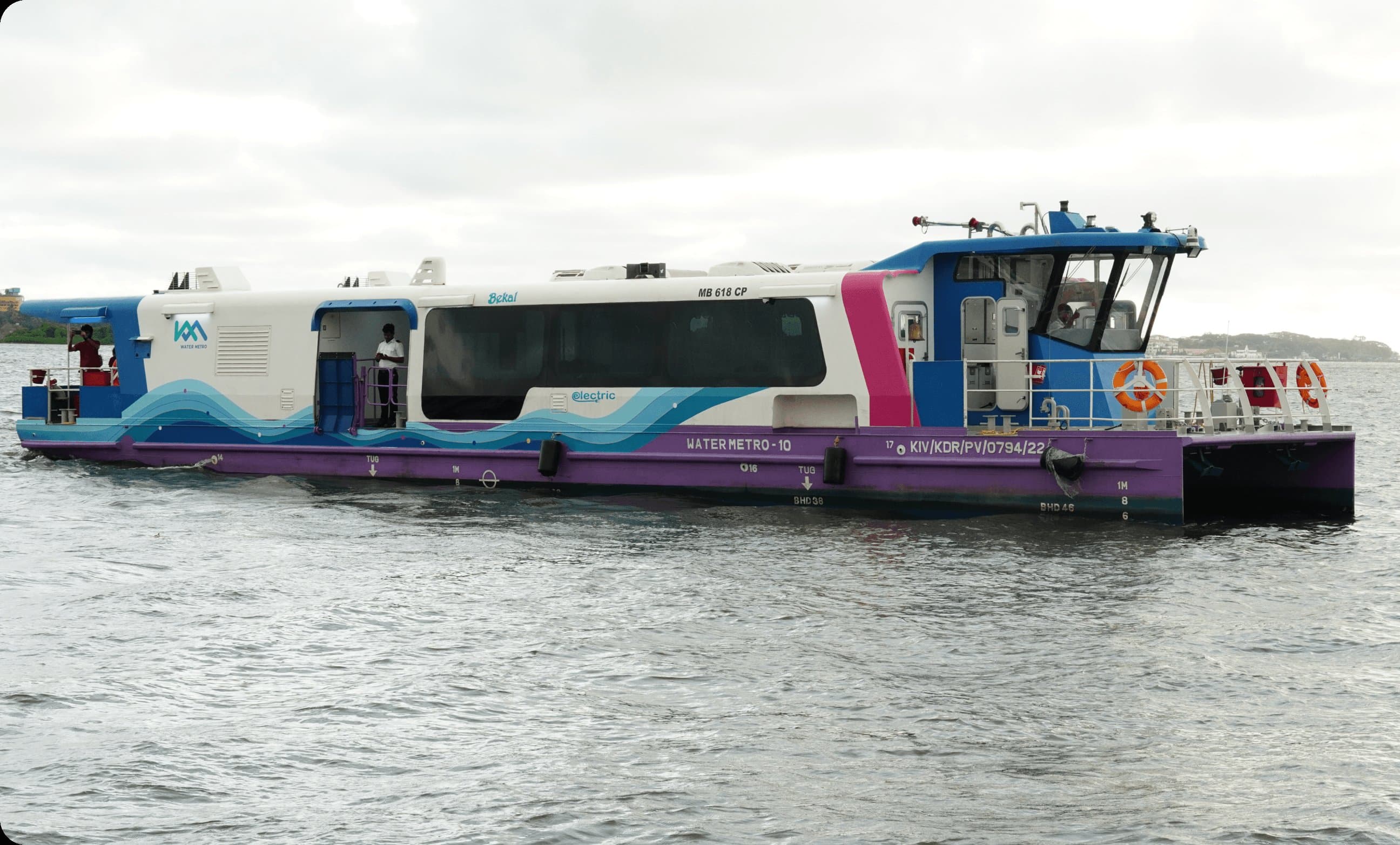
Kochi Water Metro Plans Aluva to Cochin Airport Boat Link, Topographical Survey Tender Issued
Kochi Metro Rail Limited is studying a water metro link between Aluva Metro Station and Cochin International Airport, running along the Periyar river. KMRL has signed an agreement with the SCMS Water Institute, which will provide research and technical support for the feasibility assessment.
KMRL has issued a tender for a topographical survey of the roughly 4 km route. Aswathy Nagar, Naduvannoor, Pattoorkunnu and Kalady are listed as stops along the way.
The link would connect the water metro network to the airport and to the Kochi Metro line at Aluva.
Jaipur Metro Phase 2: PM Modi Lays Foundation Stone for Rs 13,037-Crore, 41-KM Corridor
Prime Minister Narendra Modi virtually laid the foundation stone for Jaipur Metro Phase 2 on July 4, 2026, from the HPCL refinery inauguration event in Balotra's Pachpadra, with a live broadcast at Jaipur's Sawai Mansingh Stadium.
The Rs 13,037.66-crore project builds a 41-km Prahladpura-Todi Mod North-South corridor with 36 stations, linking Sitapura Industrial Area, VKI, Jaipur Airport, Tonk Road, SMS Hospital and the Railway Station. RMRCL, a 50:50 Centre-state joint venture, targets completion by September 2031.
Common questions about metro travel in India: tickets, fares, station facilities, timings, and more.
A metro train system in India is a rapid urban public transport network designed for fast, safe, and reliable travel within major cities. Metro trains run on dedicated elevated or underground tracks to avoid road traffic congestion.
MetroYatra helps you explore metro routes, stations, fares, and maps across Indian metro cities in one place.
India currently has metro rail services across 23 cities and regions, including major metros like Delhi, Mumbai, Bengaluru, Hyderabad, Chennai, Kolkata, Pune, Ahmedabad, Lucknow, and Kanpur, alongside Agra, Bhopal, Indore, Jaipur, Kochi, Patna, Noida-Greater Noida, Navi Mumbai, Nagpur, Gurugram, and Meerut (including the Delhi-Meerut RRTS).
MetroYatra provides route maps, station details, and fare information for all of these cities.
Delhi Metro is currently the largest metro rail network in India covering Delhi NCR including Noida, Gurugram, Ghaziabad, and Faridabad.
MetroYatra supports full Delhi Metro route planning with interchange guidance and fare calculation.
No, they are different systems. Metro trains run frequently within city limits for short urban trips, while suburban rail covers longer routes connecting a city to its outskirts and surrounding towns.
It depends on the city and the stretch. Most metro lines have a mix: some sections run on elevated tracks above the road, while others go underground. A few stations are at ground level too.
Yes. Most metro networks in India are run by government bodies set up jointly by the central and state governments, such as DMRC for Delhi or NMRC for Noida.
Yes. Metro systems in India are tourist-friendly with English signage, maps, announcements, and QR ticket options.
Yes. MetroYatra provides metro maps at city/network and line levels where available.
An interchange station is a point in the metro network where two or more lines meet, allowing you to switch from one line to another without exiting the station and re-purchasing a ticket. When MetroYatra shows a route with an interchange, it also shows which platform to use and which direction to board, so you can navigate the station confidently even on your first visit. Common major interchanges include Rajiv Chowk (Delhi), Kalkaji Mandir (Delhi), and Botanical Garden (Delhi/Noida).
Use MetroYatra's route planner: select your origin and destination station, and the tool instantly shows all available routes ranked by travel time, including interchange points, platform directions, fare, and step-by-step boarding instructions. For routes requiring multiple line changes, each interchange is shown with the exact platform number and direction so you never have to guess on the ground.
Yes. Schedules and some services can change due to maintenance work, special events, or temporary adjustments. It is a good idea to check timings on the day if you are travelling at off-peak hours.
Yes. Ongoing construction or network upgrades can lead to temporary changes in service on certain stretches. Affected stations are usually announced in advance by the metro authority.
Most Indian metro systems operate from morning to night; exact first and last train timings vary by city and line.
Most Indian metro systems operate from approximately 05:00 AM to 11:00–11:30 PM, though exact first and last train timings vary by city, line, and station. Delhi Metro, for example, runs its first services around 05:00 AM and last services around 11:30 PM. MetroYatra shows first and last train timings where official data is available. Always verify on the day if you are travelling very early or late.
Indian metro fares are distance-based: the further you travel, the higher the fare. Each metro network (DMRC, MMRC, NMRC, etc.) sets its own fare slab, so fares differ from city to city even for similar distances. MetroYatra shows the exact fare for every route, including routes that cross multiple lines. Using a stored-value Smart Card typically gives a 10% discount over single-journey tokens on most networks.
A metro smart card is a rechargeable card: you load money onto it and tap in and out at the station gates, skipping the token queue entirely. Most networks give Smart Card users a 10% fare discount on every trip. Keep in mind that cards generally work only on their own network: a Delhi Metro Smart Card will not work on the Noida Aqua Line, which runs under a separate system. If you are spending more than a day or two in the same city, getting a Smart Card is almost always worth it.
Many networks support digital ticketing through smart cards, QR tickets, or app-based options.
Yes. Most metro stations across India are equipped with lifts, escalators, tactile flooring, wheelchair-accessible coaches, and priority seating. Larger interchange stations tend to have more comprehensive accessibility infrastructure. If you need assisted access, station staff at the customer service desk can help. Accessibility facilities vary slightly between older and newer stations on the same network.
MetroYatra currently covers 23 metro networks across India: Agra Metro, Ahmedabad Metro, Bengaluru Metro (Namma Metro), Bhopal Metro, Chennai Metro, Delhi Metro, Delhi-Meerut RRTS (Namo Bharat), Gurgaon Rapid Metro, Hyderabad Metro, Indore Metro, Jaipur Metro, Kanpur Metro, Kochi Metro, Kolkata Metro, Lucknow Metro, Meerut Metro, Mumbai Metro, Nagpur Metro, Navi Mumbai Metro, Noida-Greater Noida Metro, Patna Metro, and Pune Metro. Together these networks span 54 lines and 866 stations across 22 cities. Coverage keeps expanding as new networks open. Each network has full route, fare, station, and map data.
Yes, MetroYatra is particularly useful for tourists who are unfamiliar with a city's metro network. Beyond route and fare information, station pages include nearby landmarks and attractions, entry and exit gate guidance, and connectivity information, helping you figure out not just how to reach a station but which gate to use once you get there.
MetroYatra is an independent journey-planning platform, not an official metro authority website. Route, fare, and timing data is sourced and curated from official networks (DMRC, NMRC, MMRC, etc.) and verified regularly. For critical journeys (such as travel on newly opened lines or during network disruptions), we recommend confirming with the official metro authority or app for that city.
Metro systems support greener urban mobility by reducing road congestion and lowering transport emissions per passenger.
MetroYatra is a good starting point for route, fare, and station information. For real-time updates, service alerts, or newly opened lines, check the official metro authority website or app for your city, such as the DMRC app for Delhi or the NMRC website for Noida.
Disclaimer: Information on this site is provided for reference purposes only. While we make reasonable efforts to keep the information accurate and up to date, details such as routes, timings, fares, stations, and service information may change. Always verify important travel details with official metro sources before you travel.